Sleep is a fundamental pillar of good health, yet many people neglect its importance. In this guide, we’ll explore the profound connection between sleep and overall health, and how to improve your sleep quality.
The Sleep-Health Connection
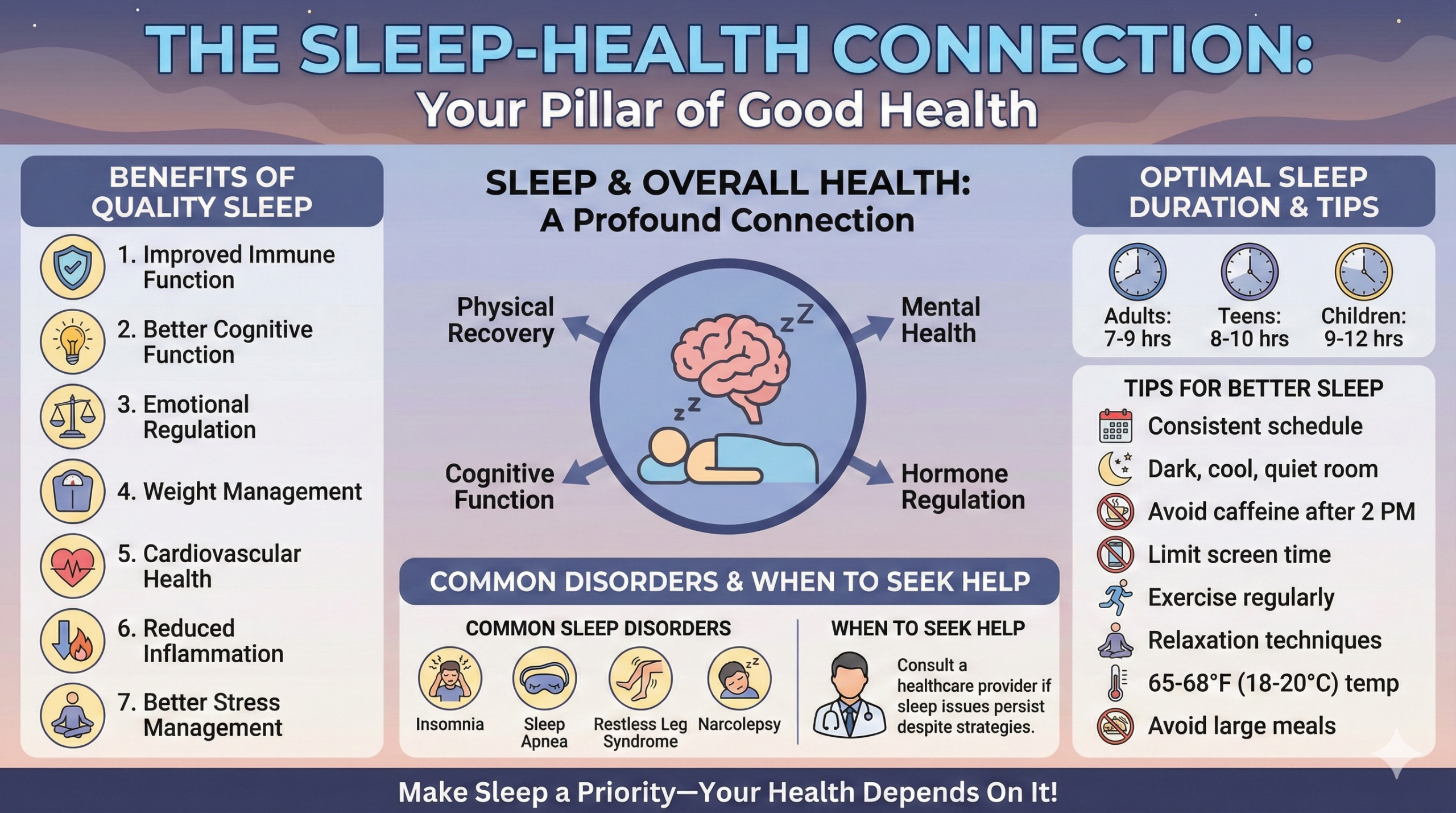
Adequate sleep is essential for physical recovery, mental health, and cognitive function. During sleep, your body repairs tissues, consolidates memories, and regulates hormones critical for health.
Benefits of Quality Sleep
1. Improved Immune Function
Quality sleep strengthens your immune system, helping you fight off infections and illnesses more effectively.
2. Better Cognitive Function
Sleep is essential for memory consolidation, learning, and problem-solving abilities. You perform better mentally when well-rested.
3. Emotional Regulation
Sufficient sleep helps stabilize moods and reduces the risk of anxiety and depression.
4. Weight Management
Poor sleep disrupts hormones that regulate hunger, leading to weight gain. Quality sleep supports healthy weight maintenance.
5. Cardiovascular Health
Regular, quality sleep reduces the risk of heart disease, stroke, and high blood pressure.
6. Reduced Inflammation
Sleep helps control inflammatory processes in the body, protecting against chronic diseases.
7. Better Stress Management
Adequate sleep improves your ability to cope with stress and handle daily challenges.
Optimal Sleep Duration
Adults should aim for 7-9 hours of quality sleep per night. Teenagers need 8-10 hours, while children require 9-12 hours.
Tips for Better Sleep
– Maintain a consistent sleep schedule
– Create a dark, cool, quiet sleep environment
– Avoid caffeine after 2 PM
– Limit screen time before bed
– Exercise regularly but not close to bedtime
– Try relaxation techniques like meditation or deep breathing
– Keep your bedroom temperature around 65-68°F (18-20°C)
– Avoid large meals close to bedtime
– Consider a relaxing bedtime routine
Common Sleep Disorders
Insomnia: Difficulty falling or staying asleep
Sleep Apnea: Interrupted breathing during sleep
Restless Leg Syndrome: Uncomfortable sensations in legs
Narcolepsy: Excessive daytime sleepiness
When to Seek Help
If you consistently struggle with sleep despite implementing these strategies, consult a healthcare provider or sleep specialist. Sleep issues can indicate underlying health conditions that require medical attention.
Make sleep a priority—your health depends on it!